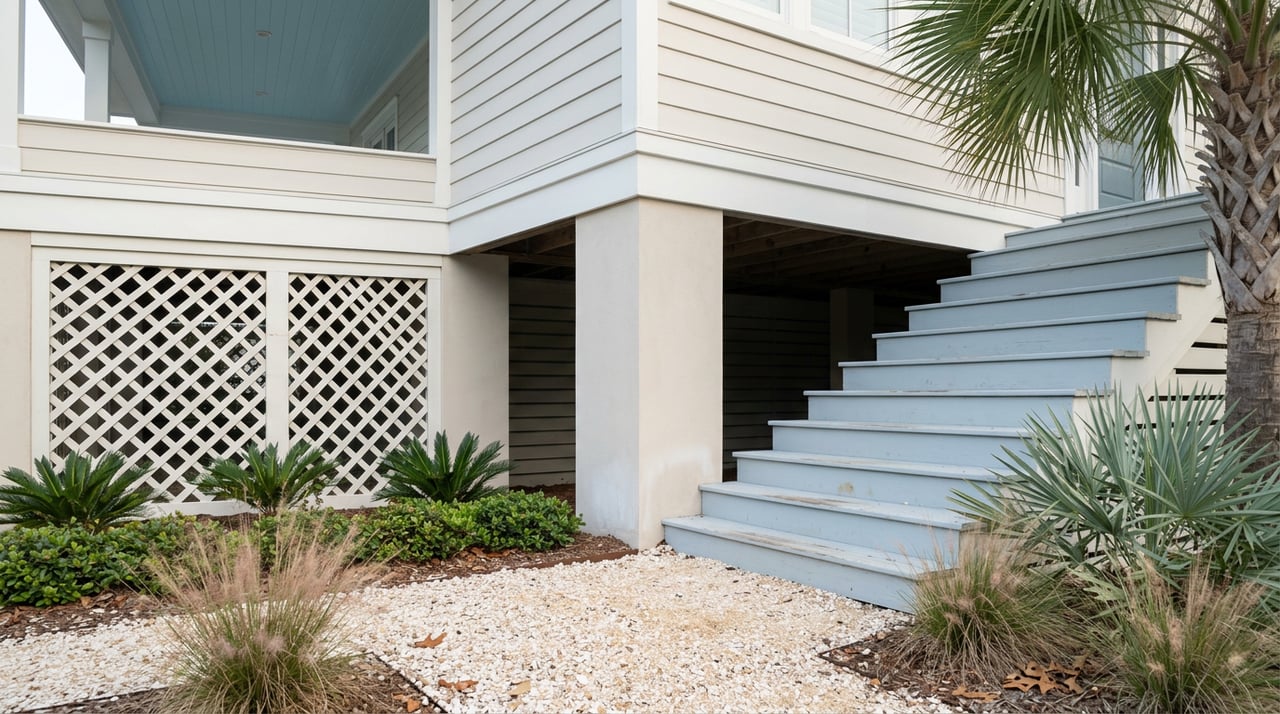
Amelia Island Short-Term Rental Zoning and Home Value
August 27, 2026
August 27, 2026
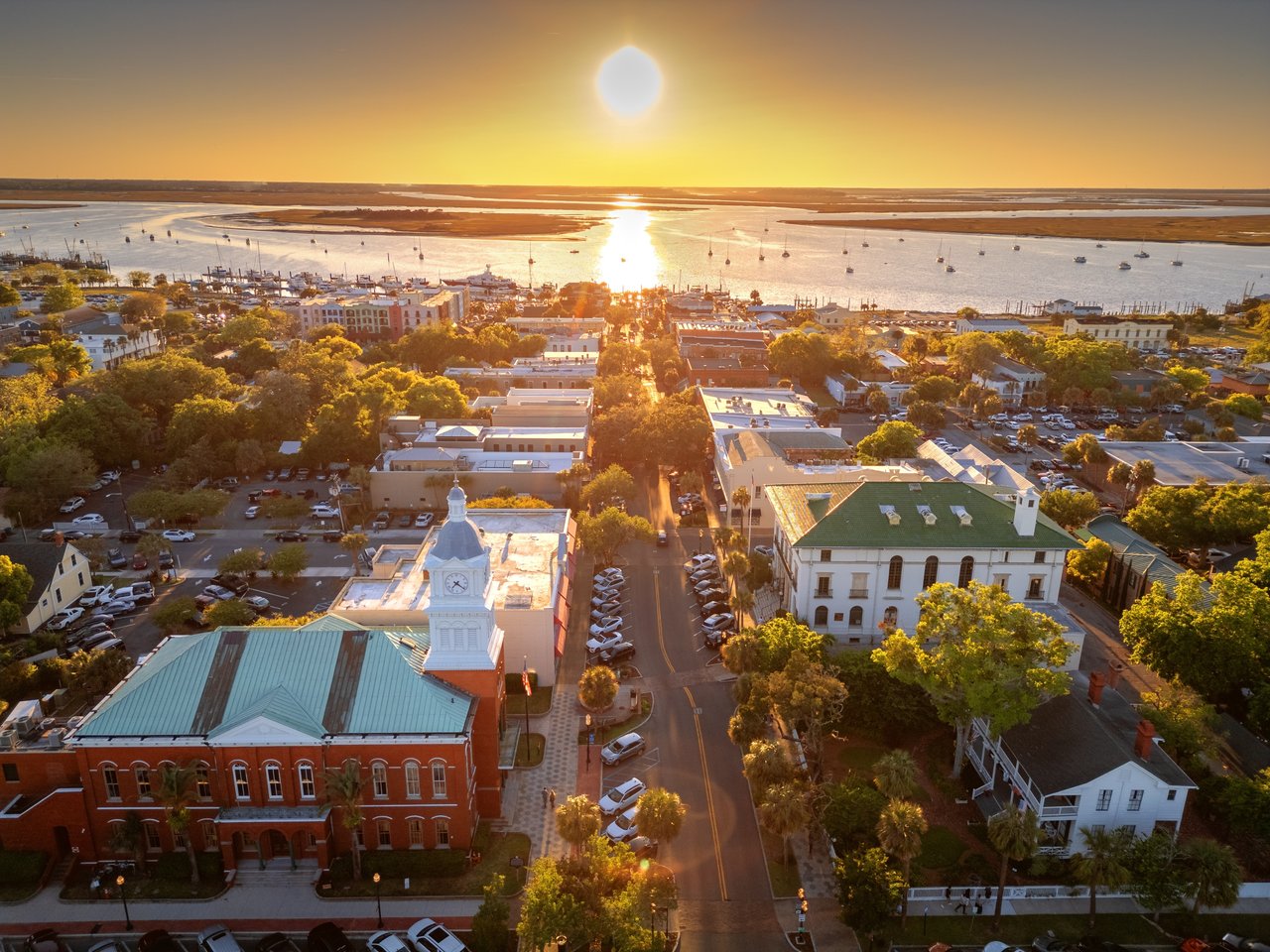
Picture two 1920s cottages three blocks apart in Fernandina Beach. Same era, same square footage, same walk to Centre Street, same weathered tin roof style you see all over the historic district. One of them can legally run as a nightly rental and pull income every week of shrimp festival season. The other may not be eligible, unless it qualifies for grandfathered status. The difference has nothing to do with the house. It comes down to a line the city drew on a zoning map back in 2000, and most buyers never think to check it until an offer is already in.
That line is the single biggest reason two homes that look interchangeable on a listing photo can carry very different price tags and very different futures. If you are comparing homes on Amelia Island right now, understanding it will tell you more about what you are actually buying than the square footage ever will.
Fernandina Beach permits short-term, nightly-style rentals in exactly one zoning district: R-3, High Density Residential. That district runs mostly along the beach and covers a narrow slice of the city's total footprint. Outside R-3, a rental period under 30 days is not allowed unless the property has qualifying grandfathered status, regardless of how the property is marketed.
That grandfathered status is narrow by design. A home in an R-1 or R-2 district can keep operating as a short-term rental if it was already doing so before October 3, 2000, the effective date of City Ordinance 2000-28, and the property's Resort Rental Dwelling Permit has never lapsed for more than 180 days. That grandfathered status travels with the address, not the owner, so it survives a sale. Lose it through a lapse, though, and it does not come back.
The reason this ordinance still controls the market a quarter century later is a matter of timing as much as policy. According to BnBCalc, Florida passed a law in 2011 that bars most cities from banning or tightening short-term rental rules, but it grandfathers any local ordinance already on the books by June 1, 2011. Fernandina Beach's rule cleared that bar with a decade to spare, so the state's own preemption law protects the city's right to keep enforcing it. You can read the current framework directly on the City of Fernandina Beach's Resort Rentals page, including the permit requirements and the grandfather provision.
Landing in R-3, or holding a valid grandfathered permit, does not end the paperwork. A qualifying property still needs a Resort Rental Dwelling Permit from the city, a Florida Public Lodging License from the state, and registration with Nassau County's tax collector. Every stay carries a combined 12 percent tax stack: 6 percent state sales tax, 1 percent county surtax, and a 5 percent county Tourist Development Tax. The state portion is generally collected automatically by major booking platforms, but the county's 5 percent has to be filed by the host directly, every month, no matter which platform brought the guest.
None of that is a reason to avoid a rental-eligible property. It is a reason to know exactly what you are inheriting before you close, because the income potential that shows up in a listing description only exists if the zoning and the permit history actually support it.
Here is where it gets interesting for anyone comparing neighborhoods. Amelia Island already has a well understood price ladder based on geography. Mainland communities west of the Amelia River, like Yulee, tend to run from the high $200,000s into the $600,000s. On the island itself, interior single-family homes away from the beach cluster in the mid $500,000s to $800,000s range as of mid-2026 market activity. The historic downtown district and true oceanfront property routinely clear $1 million, with restored Victorians and beachfront estates running well past that into the several-million range. Oceanfront condos sit in between, often in the $600,000s to $900,000s, offering the most accessible way onto the sand itself.
Every one of those price tiers contains a mix of R-3 and non-R-3 parcels. A $650,000 interior home in Amelia Park is almost certainly not eligible for nightly rental, since that neighborhood was built as a walkable, New Urbanist community and sits mostly outside the R-3 footprint. A similarly priced condo closer to the shoreline might sit squarely inside it. Two buyers spending the same amount can walk away with completely different assets: one a primary residence with no rental upside, the other a property that can legally generate income the day the paperwork clears. The zoning map, not the price bracket, is what tells you which one you are looking at.
This matters most for anyone buying with an eye toward flexibility, whether that is offsetting carrying costs with occasional rental income or simply wanting the option down the road. Checking a listing's price tells you what neighborhood you're in. Checking the parcel's zoning tells you what you can actually do with the house.
Zoning is not the only factor quietly splitting up what looks like one market. Amelia Island sits across several FEMA flood zone classifications, and the split matters just as much to your monthly costs as the STR question matters to your income potential.
According to Pickett Construction, oceanfront parcels commonly fall into VE zones, the coastal high-hazard designation, where construction standards require elevating the lowest structural member above base flood elevation on pilings or breakaway walls. Marsh-adjacent and inland parcels are more often in AE zones, which require the finished floor to sit above base flood elevation but allow conventional enclosed foundations. Nassau County layers additional freeboard requirements on top of the federal minimums, meaning the exact elevation a home needs to clear varies by zone and construction type.
The document that actually determines your flood insurance premium is the elevation certificate, prepared by a Florida-licensed surveyor. In Florida, a new elevation certificate typically costs between $400 and $900, and it can shift an annual flood premium by $500 to $2,000 or more depending on how far above or below base flood elevation the home sits. Two houses with identical square footage and identical zoning can carry very different carrying costs simply because one seller has a current certificate proving the home sits high and dry, and the other does not.
This is a separate axis from the STR question, and the two rarely line up neatly. A fully rental-eligible oceanfront home with an outdated or missing elevation certificate can carry insurance costs that erase much of its income advantage. Meanwhile, a smaller grandfathered rental set back from the water on favorable ground can sometimes out-earn a flashier beachfront listing once you run the full cost picture, not just the purchase price.
A few steps take the guesswork out of both of these variables before you are committed to a contract.
None of this shows up in a standard listing description, and none of it is visible from a curb walk. It is exactly the kind of detail that separates a home that fits your plan from one that just resembles it.
Can a non-R-3 home ever become eligible for short-term rental? No, unless it already had that grandfathered status running before October 3, 2000. New rentals cannot be created outside R-3 today, regardless of renovations or permit applications.
Does buying on the mainland avoid this issue entirely? It sidesteps the city ordinance specifically, since Fernandina Beach's rule only applies inside city limits. A mainland parcel in unincorporated Nassau County operates under separate county regulations, which still need their own check.
Is a favorable flood zone enough on its own to guarantee lower insurance? Not by itself. Insurers price primarily off the elevation certificate, not just the zone label, so a home in a good zone without a current certificate on file may still be quoted at a higher rate until one is produced.
If you are weighing homes on Amelia Island and want the zoning and flood picture pulled for a specific address before you tour, that is exactly the kind of groundwork Market Makers Group handles before you ever write an offer. Reach out for a free home valuation and we will walk the full cost and rental picture with you, not just the listing price.
This article is general information, not legal, tax or financial advice. Consult a qualified professional about your situation.
Stay up to date on the latest real estate trends.

Whether you’re buying your first home or planning your next sale, our team is here to guide you every step of the way.
ADDRESS 8380 BAYMEADOWS RD STE 17 JACKSONVILLE FL 32256