St Johns County vs Jacksonville: Choosing Your Next Home
April 2, 2026
April 2, 2026
Trying to choose between Jacksonville and St. Johns County for your next move? You are not alone. Many Northeast Florida buyers end up comparing these two areas because each offers a very different mix of price, pace, housing style, and daily convenience. This guide will help you sort through the trade-offs so you can decide which location better fits your budget, lifestyle, and goals. Let’s dive in.
If budget is one of your biggest factors, this is often where the decision starts to become clearer. According to Redfin housing market data for St. Johns County, the median sale price is about $481,480 in St. Johns County compared with about $299,990 in Jacksonville.
That means St. Johns County is roughly 60% more expensive based on current median sale prices. It is also a market where homes are taking slightly longer to sell, at about 94 days versus about 84 days in Jacksonville. For you as a buyer, that can affect how far your budget stretches and what type of home you can realistically target.
Census QuickFacts for St. Johns County and Jacksonville also show higher median owner-occupied home values, higher monthly owner costs, and higher rents in St. Johns County. If you want more price flexibility, Jacksonville may open up more options. If you are comfortable paying more for a different lifestyle package, St. Johns County may feel worth the premium.
One of the biggest differences between these two markets is how they feel on the ground. Jacksonville offers more housing variety across a much larger area, while St. Johns County leans more toward coastal suburban and master-planned living.
Jacksonville gives you a broader mix of neighborhood styles and housing types. Areas highlighted by Visit Jacksonville’s neighborhood guide include Riverside/Avondale with a walkable historic district, Springfield with restored mansions and bungalows, San Marco with boutiques and cafés, and Mayport Village with a working waterfront identity.
If you want options, Jacksonville stands out. You can look at historic settings, urban pockets, river-adjacent areas, and coastal sections, all within the same broader market. That variety can be helpful if you are still figuring out your ideal home style or daily rhythm.
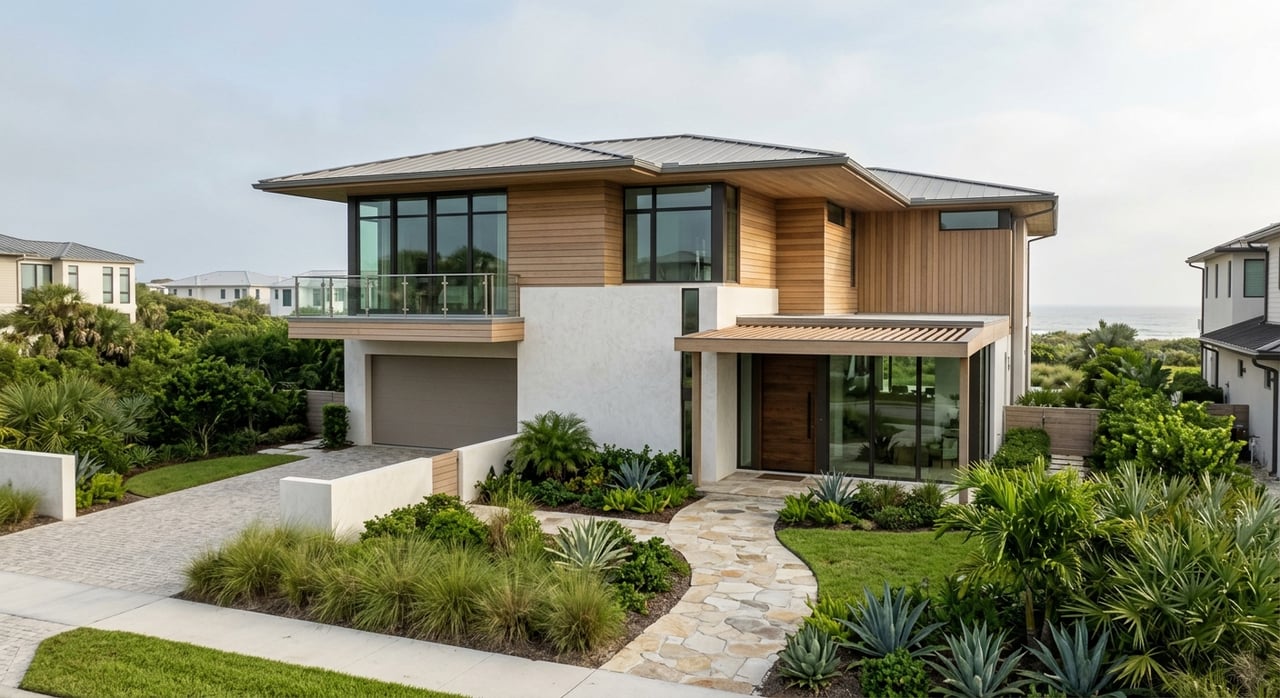
St. Johns County tends to attract buyers who want newer construction, planned communities, or coastal suburban surroundings. The St. Augustine area community guide highlights communities such as Nocatee, Beacon Lake, RiverTown, World Golf Village, and Stillwater, along with beach-oriented pockets near St. Augustine.
Housing options in the county range from townhomes and apartments to single-family homes, custom homes, condos, cottages, and golf-course properties. In many parts of St. Johns County, the appeal is not just the home itself, but the way the neighborhood is set up around trails, preserves, clubhouses, waterfront access, or other planned amenities.
Where you live shapes how your day feels. That is why this decision is about more than just price per square foot.
Jacksonville offers a larger-city mix of things to do. Public-facing examples from Visit Jacksonville point to riverfront parks, the Riverside Arts Market, St. Johns Town Center’s 175-plus retailers and restaurants, and waterfront culture around Mayport.
For you, that can mean more variety in dining, shopping, events, and neighborhood experiences. If you want a market with more contrast from one area to the next, Jacksonville may offer the flexibility you are looking for.
St. Johns County has a more concentrated coastal and resort-suburban feel. The county includes places like St. Augustine Beach, Crescent Beach, and Vilano Beach, and the St. Johns County Ocean Pier offers fishing, volleyball, a playground, and a splash zone, according to the community resources cited in the research.
Many of the county’s planned neighborhoods also layer in lifestyle amenities such as pools, trails, golf, kayaking access, and preserves. If your ideal move includes a more contained community setup with recreational amenities built into daily life, St. Johns County may feel like a stronger fit.
Your daily drive or travel routine can shape your experience just as much as the home itself. Jacksonville and St. Johns County handle mobility differently.
Jacksonville has the broader public transit network. The First Coast Flyer is a 58-mile bus rapid transit network, and the Skyway connects downtown destinations including business, government, restaurants, shops, museums, and entertainment venues.
If you want stronger downtown access or more transportation options beyond driving, Jacksonville has the advantage. That may matter if your work, errands, or lifestyle center around downtown or nearby districts.
St. Johns County does have a commuter connection to Jacksonville through the weekday-only St. Johns Express Select. Still, the area is more highway-oriented overall, with regional planning materials pointing to pressure on US-1 and I-95 and the need for stronger links between residential areas and job centers.
Average travel time to work is about 26.9 minutes in St. Johns County versus 24.1 minutes in Jacksonville. That is not a massive difference, but it does reflect how location and commute patterns may influence your day-to-day routine.
Market data can also give you a sense of how each area lives. In this case, owner occupancy and population density help paint a clear contrast.
St. Johns County has an owner-occupied housing rate of 82.2%, compared with 57.6% in Jacksonville, based on U.S. Census QuickFacts. It is also far less dense, at 455.2 people per square mile versus 1,270.7 in Jacksonville.
For you, that may translate into a more suburban feel in St. Johns County and a more urban or mixed-density feel in Jacksonville. Neither is better across the board. It simply depends on whether you want more space and lower density or more city-scale energy and access.
The right answer depends on what matters most in your next move. A simple side-by-side view can help.
| Priority | Jacksonville | St. Johns County |
|---|---|---|
| Budget flexibility | Stronger | More limited |
| Median sale price | Lower | Higher |
| Housing variety | Broader mix | More planned and coastal |
| Community style | Urban, historic, coastal mix | Master-planned, suburban, beach-oriented |
| Transit options | More robust | More limited |
| Density | Higher | Lower |
| Owner-occupied profile | Lower | Higher |
| Lifestyle focus | Variety and access | Amenities and coastal living |
If you are deciding between Jacksonville and St. Johns County, start with your non-negotiables. Think about your price range, how much space you want, your commute needs, and what you want daily life to feel like.
Then compare what each market gives you at your target budget. In many cases, the choice comes down to value and variety in Jacksonville versus space, amenities, and a more planned lifestyle in St. Johns County.
The good news is that both markets offer strong opportunities, just in different ways. If you want clear, local guidance on which communities best fit your timeline and budget, Kaitlin Chernyshov and the Market Makers Group can help you build a smart plan for your next move.
Stay up to date on the latest real estate trends.
Whether you’re buying your first home or planning your next sale, our team is here to guide you every step of the way.
ADDRESS 8380 BAYMEADOWS RD STE 17 JACKSONVILLE FL 32256