Planning A Multi-Generational Home Purchase In St. Augustine
May 14, 2026
May 14, 2026
If your household needs more than just extra bedrooms, buying the right home in St. Augustine can feel more complicated than a typical move. You may be planning for aging parents, adult children, long-term guests, or simply a setup that gives everyone more privacy under one roof. The good news is that with the right strategy, you can narrow your search, avoid costly surprises, and focus on homes that truly fit how your family lives. Let’s dive in.
Before you look at listings, get clear on how your household will actually use the space. A multi-generational home purchase works best when you plan around daily life, not just square footage.
Start by talking through who will live in the home now and who may move in later. You should also discuss privacy needs, mobility concerns, parking, kitchen use, and whether anyone may eventually need a separate entrance or first-floor living.
In St. Augustine, that early clarity matters because the local housing stock is still mostly single-family. In St. Johns County, about 76.9% of housing units are single-family detached or attached, which means many buyers are adapting a traditional home layout rather than choosing from a large supply of purpose-built multi-generational properties.
Most buyers in this area will be comparing floor plans, lot size, and future flexibility. That is especially important in a market where owner occupancy is high and single-family homes dominate the inventory.
Census QuickFacts reports 147,527 housing units in St. Johns County, with an 82.1% owner-occupied rate and a median owner-occupied home value of $457,600. The median monthly owner cost with a mortgage is reported at $2,233, which gives you a useful baseline as you think about affordability, budgeting, and shared household expenses.
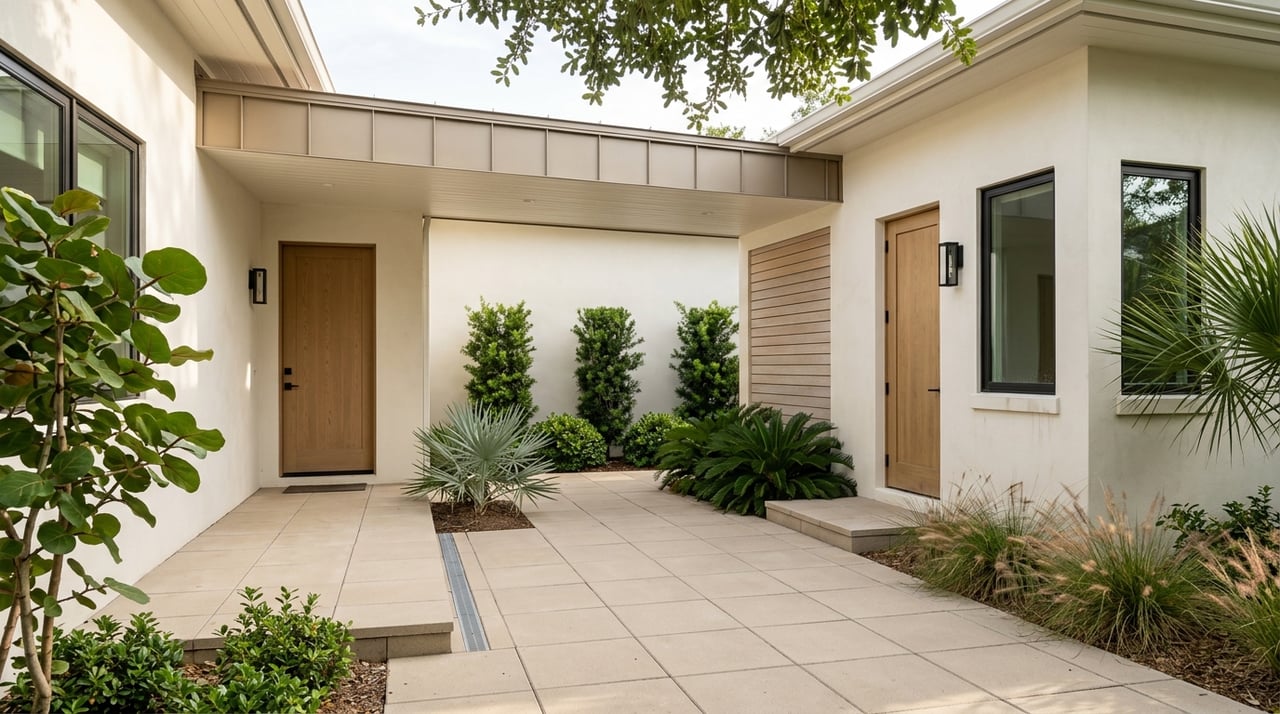
Because purpose-built multi-gen inventory is limited, the best options are often homes with features that can adapt over time. That may include split-bedroom layouts, bonus rooms, first-floor primary suites, side-entry garages, or lot configurations that support future changes if local rules allow.
When you walk through homes, look beyond the number of bedrooms. A home that works well for one family on paper may still feel cramped or awkward if everyone is sharing the same entry points, bathrooms, and common spaces.
Helpful features often include:
In St. Augustine, these practical layout details can matter more than finding a home marketed as “multi-generational.” In many cases, flexibility comes from how the home is designed and whether the property can support future updates.
This is one of the most important local distinctions for buyers in St. Augustine. Not every extra structure or detached space can function as independent living quarters.
Under the City of St. Augustine zoning code, an accessory apartment is a dwelling unit that is under 800 square feet or 25% of the primary dwelling, whichever is less, in an owner-occupied building or premises with three or fewer dwelling units. The definition includes garage apartments and some single-family type buildings used as apartments with a common entrance.
A guest house is different. In St. Augustine, a guest house may provide sleeping and sanitation space, but it is not a dwelling unit, cannot include cooking, and is capped at 500 square feet.
For your family, that difference is major. If your long-term plan depends on truly independent living space, you need to confirm whether the property supports an accessory apartment rather than assuming a guest house will do the same job.
If you are hoping to add or convert space later, zoning should be part of your home search from day one. The city zoning code lists accessory apartments among permitted uses in at least some zoning districts, and the city’s Housing Element recognizes accessory units as part of broader housing flexibility.
That does not mean every property can automatically have one. Site conditions, lot characteristics, district rules, and the specific property setup can all affect what is possible.
This is why a smart multi-generational search in St. Augustine is not just about what the home looks like today. It is also about what the property may legally support later.
A future addition or conversion may involve more than a contractor and a design plan. In St. Augustine, the city requires permits for renovations, additions, new construction, accessory structures, and similar work.
That can be especially important if you are buying an older home. The city states that structures over 50 years old may require Historic Architectural Review Board approval, which can affect timeline and project scope.
There is also an archaeology review layer for certain ground-disturbing work in mapped archaeological zones. According to the city, this can apply to projects like new homes, garages, apartments, and house extensions when the work meets the applicable depth and area thresholds.
If your purchase plan includes “we’ll add a suite later,” make sure you treat that as a real due-diligence item. In some parts of St. Augustine, future flexibility may come with added cost, approvals, and timing considerations.
Flood risk should be part of your decision early, especially when multiple generations may be relying on the home for long-term stability. The City of St. Augustine says 90% of residents live in a floodplain, and tidal flooding can happen 12 to 16 times per year.
That does not mean you should avoid the market. It does mean you should ask focused questions about flood zone, elevation, insurance costs, and access during severe weather.
For multi-generational buyers, this matters for both budget and day-to-day practicality. If a household includes older relatives, young children, or family members who need reliable access, flood exposure can affect how comfortably the home functions over time.
A property can look promising from a zoning standpoint and still run into limits through the homeowners association. In Florida, buyers in HOA communities must receive a disclosure summary before executing a contract, and that summary directs buyers to review the governing documents before buying.
Those documents may address exterior changes, use restrictions, occupancy-related rules, or assessments. In other words, even if city code is flexible, the HOA may be more restrictive.
That is why HOA review should never be treated as a quick last-minute step. If your plan involves extended family living, a future conversion, or exterior improvements, you should read those documents carefully before moving forward.
The financing structure matters just as much as the floor plan. In a multi-generational purchase, you need to decide early who will live in the home, who will go on title, and who will be on the mortgage.
Those choices can affect qualification, liability, and documentation. They can also shape your long-term flexibility if your living arrangement changes later.
The Consumer Financial Protection Bureau says a co-signer or co-borrower gives the lender added assurance that the loan will be repaid, but that person’s credit and finances are also at risk if the loan is not repaid. The same source also notes that a lender generally cannot require a spouse to co-sign if the applicant qualifies on their own, though joint applications may involve both signatures.
Fannie Mae’s current Selling Guide says only one borrower must occupy and take title to the property unless the transaction uses guarantor, co-signer, or non-occupant-borrower rules. Fannie Mae also defines a non-occupant borrower as someone, such as a parent, who may be on the mortgage without living in the home, with that borrower’s income and liabilities included in the combined debt-to-income calculation.
Fannie Mae also states that its Selling Guide loan products can be used to purchase homes with accessory dwelling units, renovate an existing ADU, or add an ADU. That can be useful if your long-term plan includes creating legal secondary living space.
A clear checklist can save you time and help your household make better decisions. Before you write an offer on a potential multi-generational home in St. Augustine, ask:
Multi-generational buying in St. Augustine is rarely a one-size-fits-all search. You are balancing household needs, property design, local code, possible future improvements, flood exposure, HOA review, and financing structure all at once.
That is why a strategy-first approach matters. When you define your living goals early and pair them with careful property screening, you can make decisions with more confidence and fewer surprises.
If you are planning a multi-generational home purchase in St. Augustine, the right guidance can help you evaluate layout, flexibility, and next-step feasibility before you commit. Connect with Kaitlin Chernyshov for clear, local guidance and a smart plan tailored to your household.
Stay up to date on the latest real estate trends.
Whether you’re buying your first home or planning your next sale, our team is here to guide you every step of the way.

ADDRESS 8380 BAYMEADOWS RD STE 17 JACKSONVILLE FL 32256